Smartphone breathalyzer for acetone detection in development
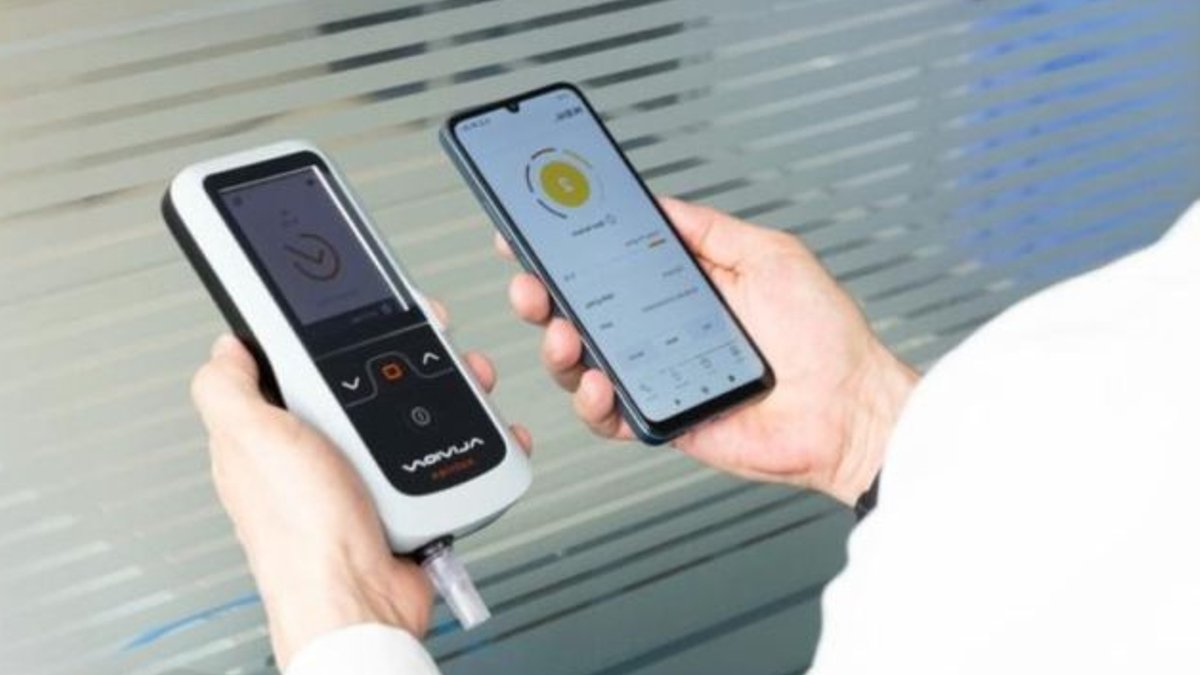
A small device that clips onto a smartphone could soon replace urine strips and blood tests as the standard way to track ketosis. Researchers at ETH Zürich have developed a breath acetone detector that measures fat metabolism by analyzing exhaled breath—similar to how alcohol breathalyzers work. The system combines a specialized sensor with an app to deliver readings that match the precision of lab-grade mass spectrometry, according to a study published this July in the journal Device.
The device addresses key flaws in existing acetone breathalyzers, which struggle with consistency due to user error, environmental humidity, or poor calibration. The new system uses a built-in air filter and pressure-controlled sampling to isolate acetone from other breath compounds. It also guides users to exhale consistently, ensuring repeatable results over time.
How Acetone Breath Tests Work
Ketosis occurs when the body burns fat for energy instead of glucose. One byproduct of this process is acetone, which is exhaled in breath. Current methods to monitor ketosis—urine strips or blood tests—are either invasive or lack precision. The ETH Zürich team’s breathalyzer aims to bridge that gap by providing real-time, non-invasive measurements.
Unlike alcohol breathalyzers, which detect ethanol, this device focuses on acetone levels. Higher acetone concentrations indicate greater fat metabolism, making it useful not just for weight loss but also for medical conditions like epilepsy or diabetes management. For diabetics, ketosis can signal dangerously low blood sugar, while epileptics on ketogenic diets rely on precise monitoring to control seizures.
The research team tested the device on 12 volunteers over eight months, comparing its readings to lab mass spectrometry—the gold standard for chemical analysis. Results showed a near-perfect correlation (R values above 0.9) across different conditions: at rest, after exercise, and on varied diets (low-carb, high-fat, fasting). Even after prolonged use, the devices maintained accuracy, detecting metabolic changes within hours of dietary shifts.
Why Accuracy Matters
Existing acetone breathalyzers often fail because they don’t account for variables like recent food intake, inconsistent exhalation depth, or humidity. Users might get wildly different readings from the same device on different days. The ETH Zürich prototype solves these issues with three key improvements:
- A pressure-based sampling system that ensures only deep-lung breath is analyzed, reducing variability.
- A humidity-resistant sensor calibrated to acetone, filtering out interference from other breath compounds.
- An app that tracks trends over time, alerting users to significant changes in fat metabolism.
The device’s reliability stems from its ability to replicate lab conditions in a portable format. Unlike commercial breathalyzers, which may drift over time, the ETH Zürich version held steady for at least eight months of testing. This consistency is critical for medical applications, where small errors could lead to misdiagnosis or poor diet management.
The researchers also noted that the system could help standardize ketosis monitoring, much like glucose meters did for diabetes. “Methods are needed that can be carried out independently and produce reliable results,” said lead researcher Prof. Dr. Andreas Güntner, emphasizing the need for accessible, accurate tools beyond lab settings.
A Glimpse at the Future
The device isn’t yet available commercially, but a university spin-off is advancing its development. If scaled for production, it could replace urine strips and blood tests for ketosis tracking, offering a faster, less invasive alternative. For now, the technology remains a proof of concept—one that could redefine how people monitor fat metabolism, whether for health or performance.
What sets this apart from earlier attempts is its combination of portability and lab-like precision. Most breathalyzers trade accuracy for convenience; this one does neither. The trade-off, however, may be cost. University-developed medical devices often start expensive before mass production drives prices down. Whether it reaches the same affordability as glucose meters remains unclear.
For now, the focus is on validation. The team’s next steps involve refining the sensor’s durability and expanding testing to larger, more diverse groups. If successful, the device could become a staple in both clinical and consumer health tech—though widespread adoption may hinge on whether users prioritize convenience over traditional methods.
The study was published in Device under the title “Self-monitoring of fat metabolic status with smartphone-assisted breath acetone detector”. Lead author Simone Hersberger highlighted its potential to “detect slight differences in fat metabolism accurately,” a claim backed by the mass spectrometry comparisons.
Related Stories
 Public Health Briefing
Somerhalder and Reed on Practical Wellness and Science-Based Supplements
 Public Health Briefing
Golden Door Chef Releases Flavorful Wellness Cookbook
 Public Health Briefing
Experts warn against overdoing skincare trends
 Public Health Briefing