HIV Injection Demand Outstrips Supply in Southern Africa
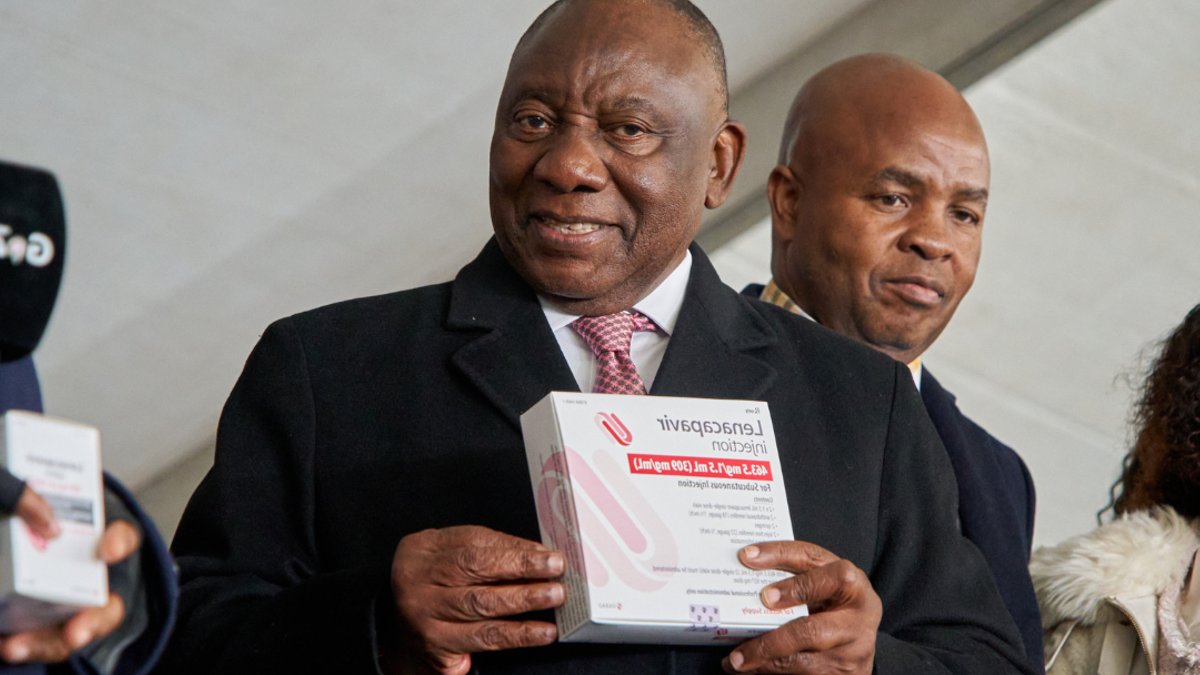
South Africa and Zambia face a unique challenge as they introduce lenacapavir (LEN), a twice-yearly HIV prevention injection. Early data indicates strong demand, but clinics struggle to meet it.
The injection, providing near-complete protection with just two annual doses, has generated excitement. Mitchell Warren, executive director of the HIV advocacy group Avac, notes he hasn’t seen such interest in HIV prevention in three decades.
However, supplies are limited. South Africa, which began its roll-out at around one in 10 government clinics on 5 June, depends on branded doses from Gilead Sciences, funded by the Global Fund. Generic versions won’t be available until 2027.
Balancing Demand and Supply
The challenge is clear: how to generate demand for a product in short supply? Insufficient promotion risks rumors, while over-promotion could lead to frustration at empty clinics.
Zambia, starting its rollout in December, has managed this by focusing outreach near clinics with available doses. South Africa plans transparency about injection availability.
In Zambia, health workers like Sister Samaria Mwale actively engage communities. Aaron, after learning about LEN, brought seven women from a brothel to a clinic for the injection.
“I took them because it’s for their protection,” Aaron said. “By these women being safe, many of us are safe.”
South Africa, despite starting later, faces similar issues. Even with 38,000 initial doses, some clinics ran out. The government emphasizes transparency, explaining stock levels and locations.
Ndlovu explains: “If we are having an honest conversation, explaining the doses we have, where we have them, and the limitations, that minimises uncertainty about where and when people can find them.”
Reaching High-Risk Groups
While demand is strong, reaching key populations remains difficult. In South Africa, only a small fraction of initial users were sex workers, gay and bisexual men, or people who inject drugs.
Jacqueline Pienaar of the Aurum Institute cites stigma and long clinic wait times as barriers. Zambia has trained staff to address this, but challenges persist.
Related Post: Families in South Africa bear the cost of caring
Zambia’s rollout, now in 500 clinics, has seen 4,382 people start LEN. Most were new to HIV prevention. Ruth Mangaa, a Lusaka resident, switched from daily pills to LEN, finding it more convenient.
“I actually feel relieved,” she says, now encouraging friends to get the injection.
South Africa has received 114,720 doses, with 42,947 used by August 17, 2026. The government is developing a national demand plan, focusing on honesty about availability.
The long-term goal is clear: secure affordable generics. Modeling shows South Africa needs one to two million annual users to significantly reduce new HIV infections. Current demand suggests this is possible, but only if generics become available.
“If we don’t get the generics,” Ndlovu warns, “we are going to run into serious problems.”
Community Engagement and Education
In Zambia, health workers and community organizations actively raise awareness about LEN. They use various methods, including drumming up interest, to inform people about its benefits and availability.
Addressing Stigma and Accessibility
Both countries struggle to reach key populations, such as sex workers, gay and bisexual men, and people who inject drugs. Stigma and long wait times at clinics are significant barriers.
Long-Term Supply and Affordability
The ultimate goal is affordable generic LEN. Gilead Sciences has licensed six companies to produce it, with two Indian manufacturers receiving donor support to match the cost of daily HIV prevention pills.
Generic LEN is expected in early 2027. South Africa is negotiating with Gilead for licenses to allow local production, aiming to increase supply and reduce costs. This is essential for meeting demand and significantly impacting HIV prevention.
Scaling Up Production for Affordable Access
Manufacturers need proof of sufficient demand to produce cheaper generic LEN in large quantities. HIV experts suggest that increasing production to 5–10 million doses annually could reduce costs to as little as $25 per person per year. In October 2024, Gilead Sciences licensed six companies to make generic LEN. Two Indian manufacturers, supported by donors, currently produce it for around $40 per person per year, similar to the cost of the daily HIV prevention pill.
Related Stories
 Chronic Condition Files
HIV Injection Demand Outstrips Supply in Southern Africa
 Chronic Condition Files
South Africa’s HIV Prevention Injection Faces Uptake Hurdles
 Chronic Condition Files
Families in South Africa bear the cost of caring
 Chronic Condition Files