Parker leads national pain strategy push
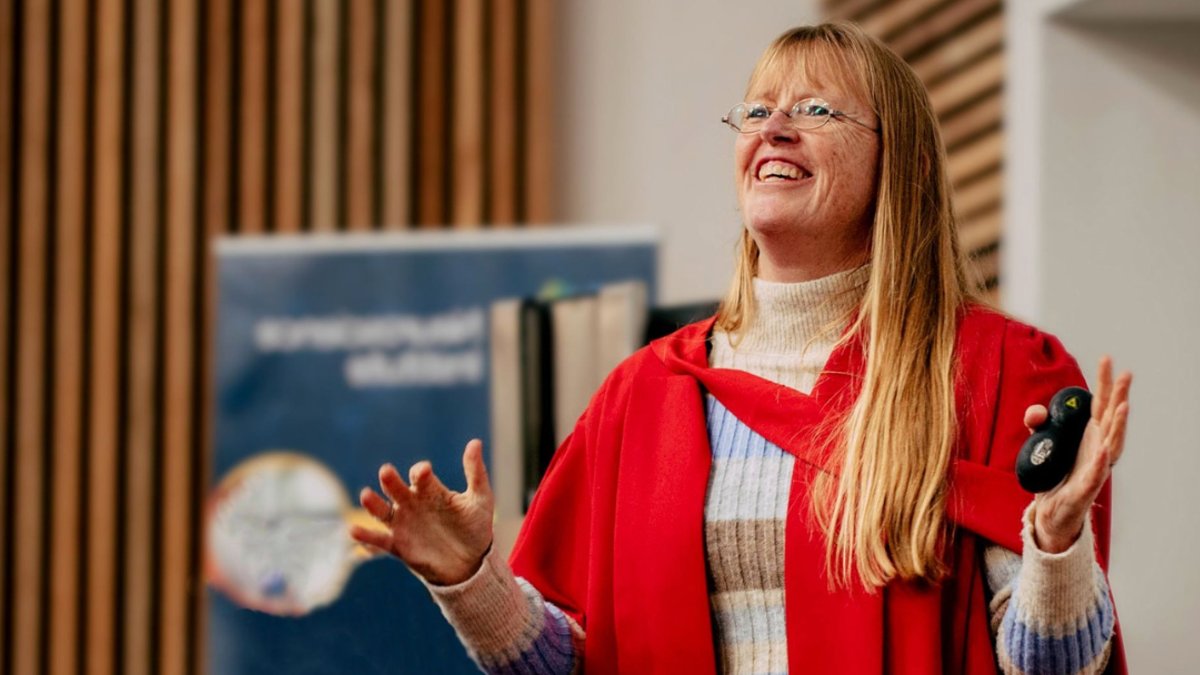
Professor Romy Parker is a physiotherapist and pain management specialist known as “the matriarch” of pain care in South Africa. She is leading efforts to create a national pain strategy, a document that maps the reasons pain goes unmanaged and proposes solutions. Good pain care, she says, is “about so much more than pills” and requires a team-based approach that starts with a patient’s social reality.
Parker is the director of the pain management unit at the University of Cape Town’s department of anaesthesia. She works at the Groote Schuur Hospital Chronic Pain Management Clinic. Her colleague Tory Madden described her as central to the work to improve South Africa’s pain response. Parker has served two terms as president of PainSA, a group focused on improving pain management in the region. She also sits on the council of the International Association for the Study of Pain.
Pain’s Systemic Problem
Pain is a primary reason people seek medical care. It follows surgery, accidents, and occurs with chronic conditions like HIV, TB, cancer, and arthritis. South Africa struggles to manage both acute and chronic pain, particularly the latter. Parker explains the problem is systemic. “It isn’t taught, which means too few healthcare professionals understand it,” she says.
Effective pain management requires an interdisciplinary team, Parker argues. This should include the patient, their family, a prescriber, a nurse, a physiotherapist or occupational therapist, a psychologist, and a psychiatrist. At the Groote Schuur clinic, Parker and her team listen to patients’ stories, which often include childhood trauma, family dysfunction, and violence. “And they say, ‘I have pain all over’. Well, I’m not surprised.”
Related Post: Families in South Africa bear the cost of caring
Patient-Centered Care
Huyaam Samuels, a patient with chronic pain for 10 years, recalls Parker’s approach. “When I first met Professor Parker she bombarded me with questions. She wants to understand the person behind the pain,” Samuels said. Parker advised Samuels to come off her pain medication and start exercising. After initial resistance, Samuels followed the advice and found the result “incredible.”
Parker’s own journey into pain management began in Hereford, Wales, where she worked as a rheumatology physiotherapist. She treated Welsh farmers with severe rheumatoid arthritis who coped stoically, alongside other patients with milder disease who were “in agony, wracked with pain.” This contrast sparked her interest. She enrolled in a master’s in pain to understand it better, driven by a belief that “human beings are valuable, and deserve to be cared for and respected.”
Building a Pain Career
Returning to South Africa in 2004, Parker struggled to find an academic job. She almost became a horse physio before being hired as a lecturer at UCT in 2005. She began secretly integrating pain into the physiotherapy curriculum. She also adapted a self-management programme from her time in Wales for people with chronic pain, running it with students to teach them the evidence-based strategies.
For her doctoral thesis, Parker focused on pain in people living with HIV, a study she says was a world first. She developed and tested a peer-led exercise and education intervention for this group. Her research looked at self-management strategies and how they change physiology. “One of the nuggets that I teach,” she says, “is that the morphine our brain manufactures is 30 times stronger than oral morphine. So go for a run. Go for a walk. Have a laugh.”
Related Post: South Africa tracks vaccine doses digitally
Building a Community of Care
She joined PainSA in 2010, when it was small and doctor-led. She met Beverly Bolton, a physiotherapist from Gqeberha. They shared the same vision and created the “Principles of Pain” course. This led to the formation of the Train Pain Academy, which offers pain management courses for practitioners. Parker is also involved in the International Association for the Study of Pain, working to improve care globally.
Early Influences
Her parents moved back to southern Africa in 1978, initially settling in Johannesburg, which Parker hated. She attended an all-girls school and did not fit in with conservative white South Africa. Growing up as a privileged white girl in apartheid South Africa was very distressing. It made her into an outsider.
Parker was conscientised by her mother’s social work and trips with her brother to Alexandra. When she was 15, she tagged along as he vaccinated kids. He often patched up people who had been beaten by police. Parker knew exactly what she wanted to do: get out of Jo’burg and become a physio. She was always sporty, and her family played sports together and camped on Rio’s beaches.


