Floods Linked to Mental Health Issues in Africa
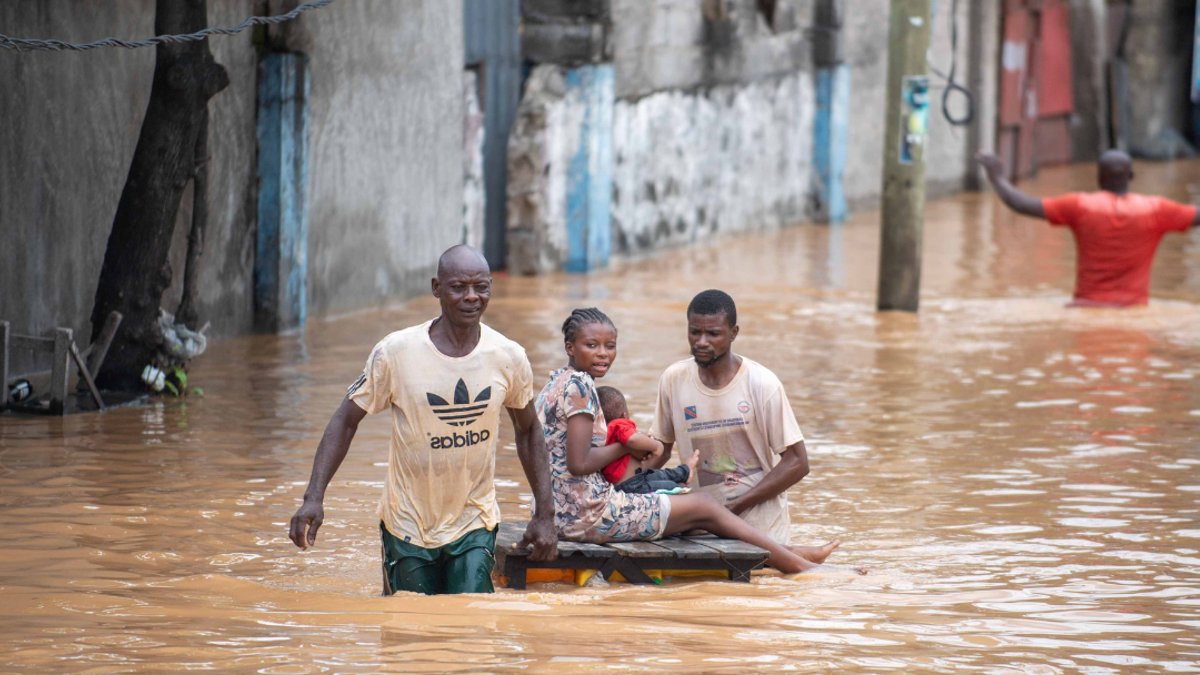
Experiencing a flood can leave emotional scars that endure long after the disaster. This psychological aftermath is often not recognized as a health concern. Data from a new study across four African countries shows a direct link between flooding and mental health issues.
Extreme rainfall and storms are expected to hit more often and become more intense with global warming. Climate change can impact people’s health in ways that are not yet fully understood, leaving scars long after a disaster. The new study aimed to better understand how floods affect mental wellbeing in Africa.
A Study Across Four Countries
The research was conducted in Burkina Faso, Kenya, Mozambique, and South Africa. The project’s lead researcher, Ahri epidemiologist Collins Iwuji, explained the goal was to look at shared patterns and differences across these regions. Although the findings do not represent all of Africa, they add important evidence to the understanding of flooding and mental health.
The study included a total of 5,336 participants. In each country, the sample size was between about 1,000 and 1,600 people, with an equal number having experienced a flood as those who had not. The sites covered both urban and rural areas and included a mix of socioeconomic conditions, household sizes, and education levels.
High Waters, Low Feelings
In all four nations studied, individuals who had experienced flooding were significantly more likely to exhibit mental health issues compared to those who had not.
When looking at the combined data from all four countries, one in 12 people who had been in a flood showed signs of serious anxiety. One in eight had symptoms pointing to depression. One in five flood survivors showed signs of post-traumatic stress disorder, a condition where a person feels like they repeatedly relive a terrifying event.
South Africa mirrored this trend, but with a notable difference: the prevalence of mental health problems among flood survivors was more than double that of the other countries combined.
The findings show that extreme weather events add another layer of stress to people’s lives, especially for those living in poverty or without good social support. “When a disaster hits, people suffer because it adds to the hardship they’re facing every day,” said Vasco Cumbe, a psychiatry expert on the research team based in Mozambique.
He explains that the distress compounds because another storm often hits before people can recover from the previous one. When the ability to rebuild livelihoods and infrastructure is already poor, an additional shock can push people closer to developing mental health problems that interfere with daily life. In the aftermath of a flood, people usually get help with basic needs like food and water, but mental health issues are often not considered. Cumbe calls this “a gap” in both disaster response and preparedness.
The study found that without flood exposure, mental health issues would have been 25% lower overall, and nearly a third lower in South Africa.
Limiting exposure is key, says Iwuji. The immediate fix is to deal with the current situation. For example, if people are warned about a flood early enough, they can prepare or evacuate. Simple maintenance, like keeping drains clear, can also help water run away instead of overwhelming buildings and roads.
The long-term solution is to curb global warming. Warm air holds more moisture than cool air, meaning that at the 2°C increase set as the upper limit of the Paris Agreement, storms could become even heavier. Hitting the carbon emission targets agreed to under the Paris Agreement is no longer a theoretical ideal. Building resilient health systems that can cope with climate change will be formally on the agenda for the first time at COP31 in Turkey in November.
‘I Feel Very Scared’
Signs pointing to PTSD were the most common mental health issue among flood survivors in all four countries. However, the amount by which the levels increased was different. For example, in the Mozambican sample, PTSD symptoms were seen in less than 1% of people who had not experienced a flood, but it was 55 times more common in those who had lived through one.
In Kenya, just over four in 10 people who had lived through a flood showed signs of PTSD, compared with three in 10 people who had not. Although this is about four times more than in the Mozambique group, the comparative in-country change is less.
Someone with PTSD is hyper-vigilant, explains Cumbe. “They never relax, they’re always waiting for the danger to hit again, even though they seem to carry on with their lives.” This constant state of fear makes it hard to bounce back. With only about two specialised mental health workers for every 100,000 people in Africa, getting help for a terrifying event like a flood is almost impossible for many. “What starts as a psychological condition can trigger a physical illness later,” Cumbe says, putting even more pressure on health systems that are already overstretched.
Young Lives Matter
The trauma of a flood seems to hit young people hard, the data shows. They had more anxiety than other age groups and higher levels of PTSD, even though the baseline levels in the control groups were similar to that in older people.


